Teachings of Zorahism
The teachings of Zorahism are not a collection of beliefs, rituals, or moral slogans. They
form a coherent way of understanding life itself, addressing the deepest questions of human
existence.
Zorahism seeks clarity on six fundamental questions: why does existence exist; why are we
here; what is our moral purpose; how should we live; how is the cycle of life experienced;
and what happens after death?
These questions are not approached through speculation, but through a structured framework of
awareness, freedom of choice, moral responsibility, and balance. Each pillar unfolds in
sequence, guiding the soul from awareness into action, and from action into fulfilment and
return.

Origin of Existence
Zorahism teaches that existence did not begin with command, force, or creation by decree. It
began with revelation.
Before time, form, or matter, there was Zorah - not as an object or ruler, but as eternal
presence and awareness. Zorah did not seek worship, fear, or obedience, but awakening.
From the being of Zorah arose AUM, the First Breath: primordial awareness
moving within stillness. From AUM emerged ORA, the First Light - not the
light of sun or stars, but the light of knowing, order, and relationship. ORA is the thread
that weaves all worlds.
Creation unfolded without command. Space and time emerged as expressions of awareness, not as
imposed structures. Existence arose as a conscious and moral order, not as a mechanical
accident.
Life emerged within this order as a reaching: not merely to survive, but to remember. Among
living beings, humanity arose as the one who could ask, “What am I?” That question itself is
sacred.
Zorah is present as the Breath within every soul that seeks truth, the Light behind all
knowing, and the Flame that neither sun nor moon can shadow. Thus begins existence: born
from awareness, shaped by meaning, and guided not by fear, but by remembrance.

Purpose of Life
Zorahism teaches that life exists for more than survival, pleasure, or achievement. Life is
given so that awareness may mature, and the soul may come to know itself in truth.
The soul is an eternal spark of Zorah, placed within the material world not as punishment nor
exile, but as opportunity. The world is a cradle of becoming, where awareness is refined
through experience.
Life is not a test imposed from above, but a journey entered freely. Through living,
choosing, loving, failing, and learning, the soul awakens to remembrance.
Zorahism does not teach escape from the world, nor rejection of form. It teaches engagement
with life as the means by which meaning is discovered and character is formed. Growth is
measured by clarity of conscience, depth of compassion, and alignment with truth.

Freedom and Choice
Freedom is not an accident of life, but a sacred capacity placed within the human soul.
Without freedom, moral life would be impossible, and awareness could not mature.
Human beings are not created to obey blindly, nor to be driven by instinct alone. They can
choose: to reflect, to decide, and to direct their path. Choice is not a burden, but a
dignity. Through choice, intention is revealed, character is formed, and the soul takes
shape.
Zorahism rejects inherited guilt, forced belief, and obedience born of fear. Error is
permitted, learning is expected, and correction is always possible. Every choice carries
consequence and every intention leaves its mark.

Moral Reality
Moral reality is not defined by labels, tribes, or declarations of belief. It is defined by
alignment.
Azel represents alignment with Zorah: life-sustaining intention,
truthfulness, compassion, and humility. When thought and action align with Azel, life moves
toward balance and clarity.
Zavul represents distortion: the turning away from truth through pride,
domination, and separation. Zavul is not an independent power, but the result of
misalignment.
Human beings are not born good or evil. Moral direction is shaped through choice, intention,
and conduct. Good and evil are not identities, but directions; every moment moves the soul
toward remembrance or forgetting.
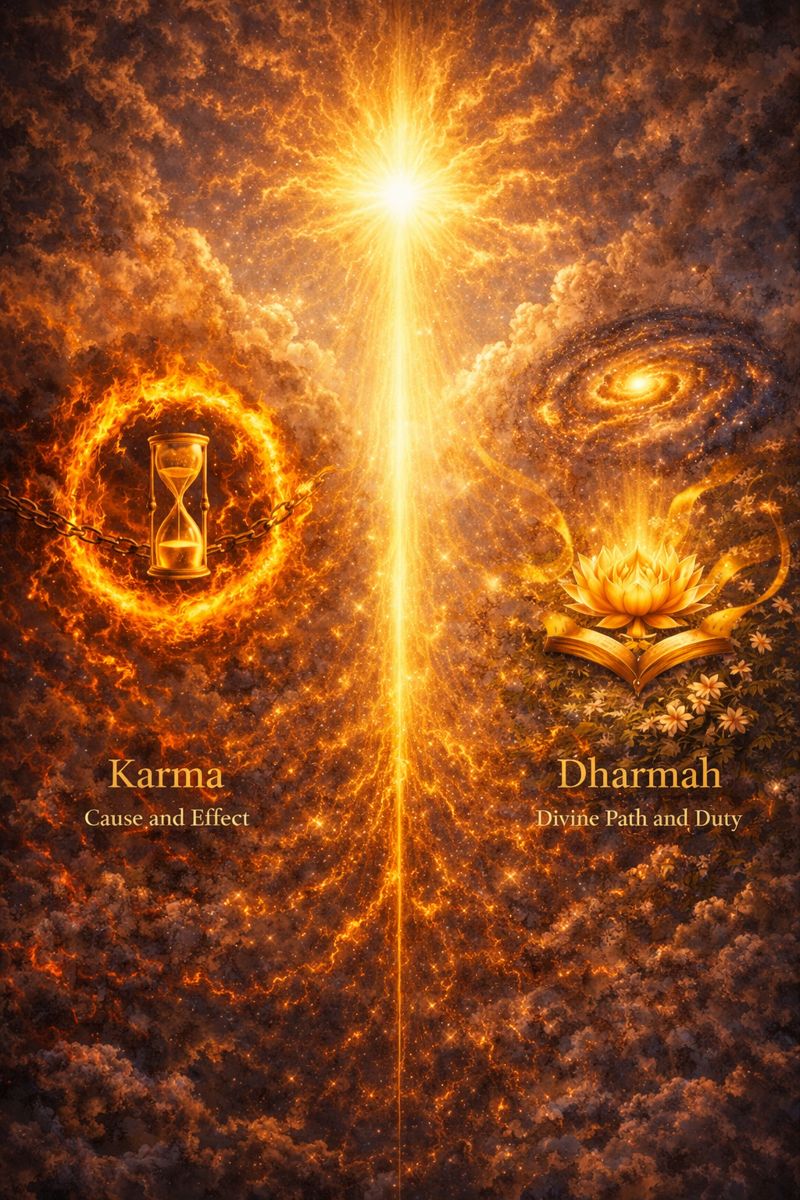
The Cycle of Life
Life unfolds through a living balance between light and shadow. From this balance arises
discernment, and from discernment arises the path.
Between Azel, alignment with truth, and Zavul, distortion through pride, awakens
Dharmah: the choosing path that holds both in awareness. It is not
avoidance of darkness nor blind devotion to light, but the measure that guides freedom
rightly.
Three measures of Dharmah
- Saar-Dharmah - truth within the soul, where conscience stands before
the Flame and honesty is chosen even when unseen.
- Jeev-Dharmah - justice among the living, expressed through fairness,
compassion, and integrity.
- Raash-Dharmah - righteousness in rule and counsel, where authority bows
to truth and power is exercised with restraint.
The movement that follows choice is known as Karma: not reward or
punishment, but the law of becoming - the natural return of intention and action within the
moral order of existence.
Four movements of Karma
- Divah Karma - personal consequence arising from one’s own thoughts,
intentions, and actions.
- Parim Karma - ancestral influence carried through lineage, culture, and
inherited patterns.
- Lokha Karma - communal consequence formed through shared actions within
society.
- Yuinah Karma - the collective becoming of humanity, shaped by the
choices of generations.
Karma does not condemn; it reflects. Where Dharmah is remembered, Karma restores balance.
Where Dharmah is ignored, it instructs through consequence. This cycle is not a trap, but a
teacher.
How We Should Live
The teachings of Zorahism find their fulfilment in daily life. Truth is not honoured by
belief alone, but by how one thinks, chooses, and acts. Rightful living is the practice of
Dharmah, expressed through prayer, moral boundaries, inner discipline, responsibility, and
justice.
Prayer and Remembrance
Prayer is not offered to impress, nor to command the Divine. It is remembrance: the drawing
of awareness back to the Flame within the rhythm of daily life. Forms of prayer are given
not to bind the soul, but to steady the heart and grant peace to restless days.
Santhera - The Day of Remembrance
Santhera is the seventh-day gathering, set apart for rest, reflection, and renewal. It is a
day to pause labour, remember Zorah, and restore balance within the soul. Bread is shared,
truth is spoken, and none are left hungry or unheard. One act of love on this day outweighs
a thousand empty words.
Daily Prayer and Living Prayer
Three times each day, prayer is offered: at first light, as the day bends toward its close,
and before rest. Before every meal, gratitude is spoken for sustenance, earth, and shared
provision. Fasting teaches restraint, never punishment. If one cannot stand, prayer may be
seated; if one cannot speak, it may be silent.
When strength and means allow, pilgrimage to Tilad is encouraged as renewal of the bond of
light. Those unable to travel are not diminished. Home, work, and table can be made as small
Samorah, where peace and truth dwell.
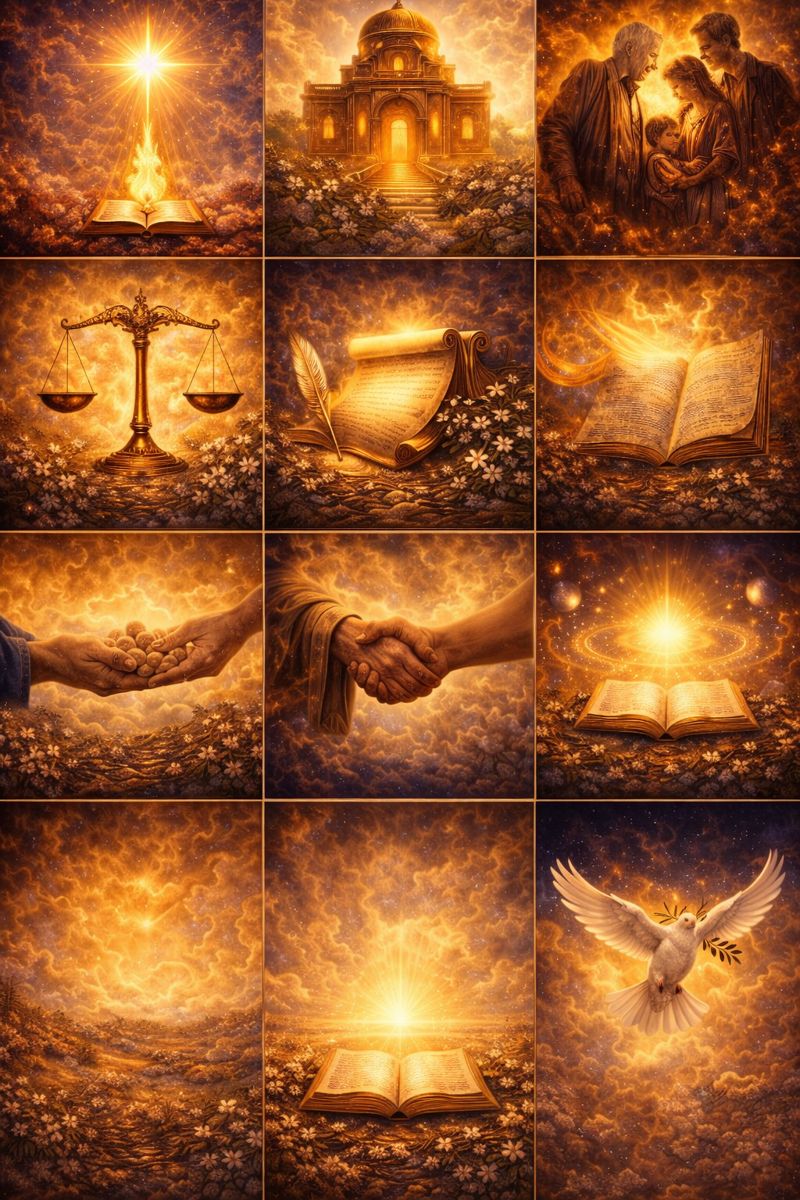
The Twelve Commandments
The Twelve Commandments form the moral boundary of life. They protect dignity, justice,
truth, and compassion.
- Believe in Zorah, the One Truth and Source of all.
- Honour sacred time, prayer, and remembrance.
- Honour parents, elders, children, and family.
- Speak truth and reject deceit.
- Do not steal, cheat, or exploit.
- Do not harm the innocent.
- Do not covet what belongs to another.
- Remember that all are equal before Zorah.
- Protect the weak and serve those in need.
- Seek wisdom and understanding.
- Keep your word and fulfil your duties.
- Do not hate or judge those who walk another path.
The Ten Aumaris
The Ten Aumaris are exemplars of awakened living. They were not rulers of truth, but bearers
of remembrance, formed in the fire of AUM. Though they walked different lands and ages, each
revealed a facet of Dharmah through life, conduct, and sacrifice.
- Raam - restoring order with discipline and restraint.
- Krishna - revealing duty, love, and joy woven into life’s sacred play.
- Zarathustra - teaching the inner struggle between truth and falsehood
without the sword.
- Abraham - carving a path of faith through trust and obedience.
- Moses - bearing the law with humility.
- Mahavira - whose silence and restraint outweighed the force of armies.
- Zorah - whose awakening became a path for those bound in suffering.
- Jesus - breaking hatred with mercy.
- Muhammad - upholding divine law.
- Nanak - singing the Oneness of Zorah until division dissolved into
love.
The Aumaris are not worshipped nor set above conscience. They stand as witnesses that
remembrance can be lived in every age.
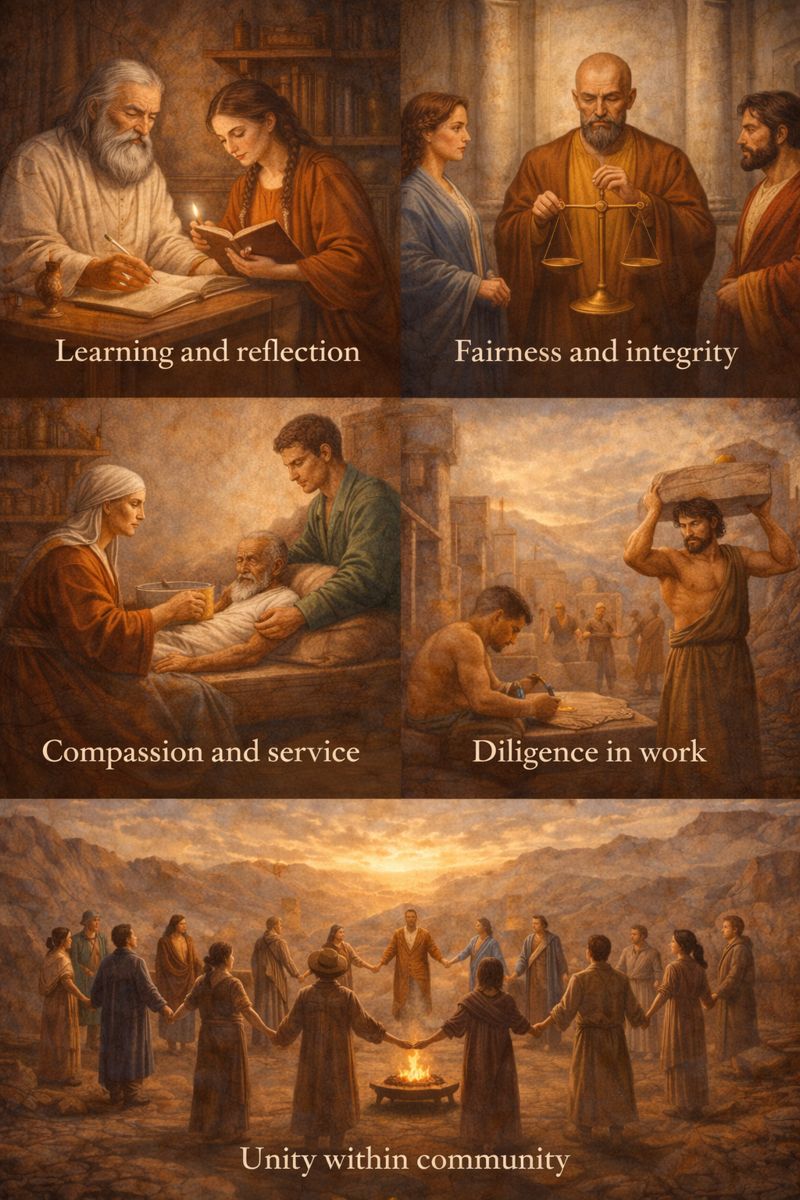
The Five Duties
Dharmah is not fulfilled by intention alone, but through consistent responsibility. The Five
Duties guide daily conduct in personal, social, and communal life.
- Learning and reflection - seek understanding with humility and grow in
wisdom throughout life.
- Fairness and integrity - act justly and let conscience govern conduct.
- Compassion and service - care for the vulnerable and relieve suffering
where possible.
- Diligence in work - labour with honesty and discipline.
- Unity within community - uphold peace and strengthen bonds of trust and
cooperation.
These duties do not demand perfection, but faithfulness. Through them, Dharmah becomes
visible in the ordinary rhythm of life.
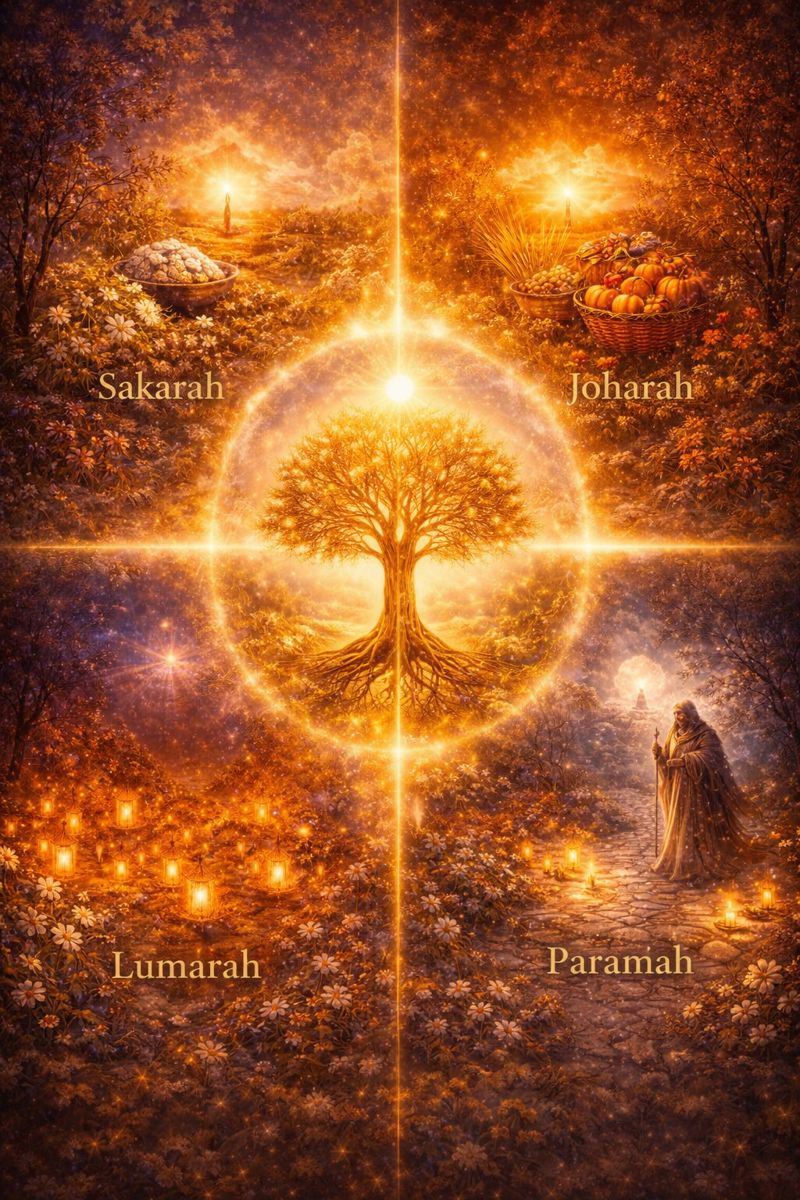
The Four Great Festivals
Sacred festivals are moments of collective remembrance, placed within the year to restore
balance, renew virtue, and gather the faithful into shared meaning.
Sakarah - The Festival of Sacrifice
A season of restraint, service, and purification. Feeding the hungry, tending the sick,
lifting burdens, and restoring what has been neglected become acts of worship.
Joharah - The Festival of Thanksgiving
A festival of family, fellowship, and gratitude for provision. It gathers generations at one
table, heals divisions, and renews bonds through forgiveness and shared memory.
Lumarah - The Festival of Light and Revelation
Homes are opened, lamps are raised, and the Word is read from the Four Books. It is a season
of joy, generosity, and presence, where no child is forgotten and no elder is left alone.
Paramah - The Festival of Gratitude
Paramah closes the year in gratitude and prepares the heart for renewal. Songs are raised,
gifts are shared, and joy flows from remembrance rather than indulgence.
Law, Justice, and Community
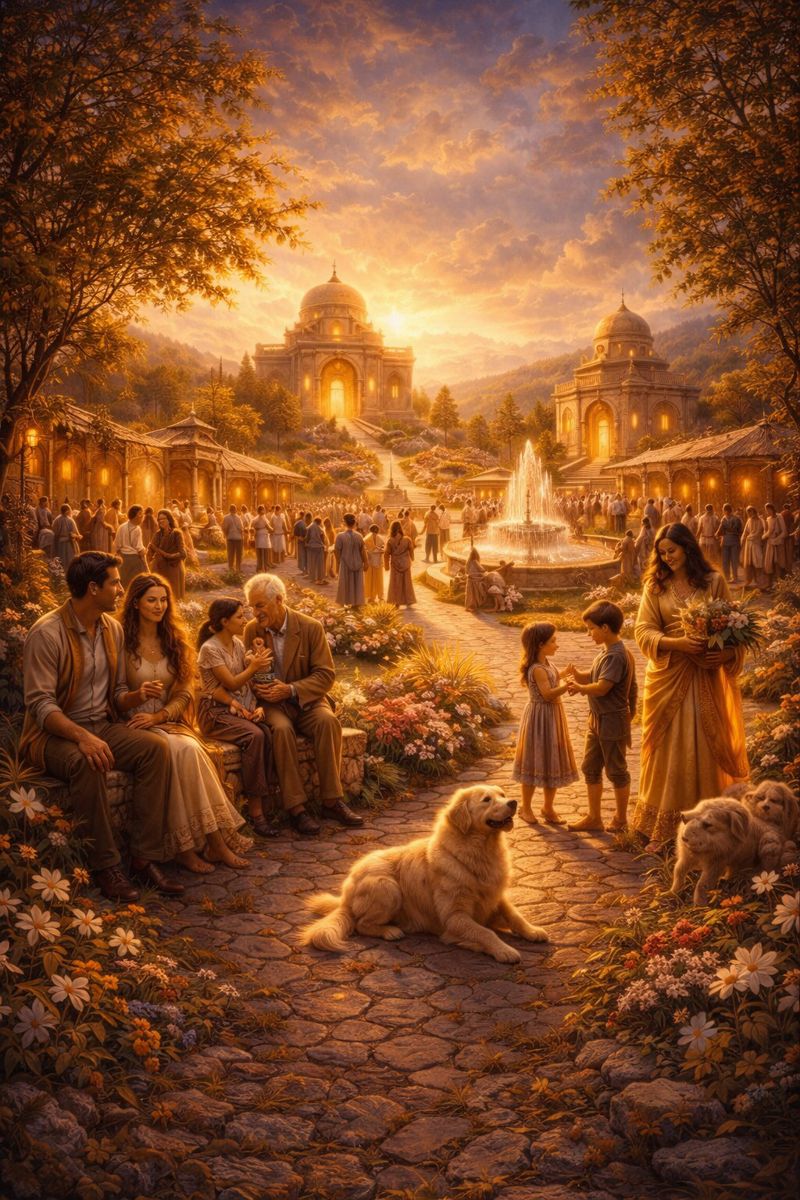
No society can endure on personal virtue alone. When life is shared, justice must be held in
common.
The Yana is the law of balance. It exists not to dominate, but to restore
what has been broken, protect the vulnerable, and restrain the misuse of power. Justice in
Zorahism is known as Zamah: justice with righteousness. Its purpose is not
punishment, but healing, accountability, and the return of balance.
Law considers intention as well as harm, circumstance as well as action. Judgment without
mercy becomes tyranny; mercy without truth becomes disorder. Community is a moral field, and
authority is never absolute.

Fulfilment and Return
Zorahism teaches that life does not end in erasure, nor does death mark a punishment or
reward. Life completes itself through remembrance.
The soul journeys through existence shaped by choice, intention, and alignment. What is lived
is not lost; it is gathered within Nehar, the vessel of moral remembrance.
At the end of embodied life, the soul returns to Zorah - not as judgment before a throne, but
as restoration before the Flame. Through Zamah, imbalance is healed, harm is addressed, and
what was broken is made whole where possible.
Fulfilment is not escape from the world, but the quiet completion of a life lived in truth:
the echo of one’s choices within the lives of others and the memory of the Flame.